
Bella Taylor ’25, Serena Wesley ’25, and Collete Plue ’26 are Animal Science majors at Purdue with minors in various biology concentrations. Together, the three researchers won an award for the Top Stem Poster at the 2023 Spring Undergraduate Research Conference. This award is provided by the Purdue chapter of Sigma Xi, the Scientific Research Honor Society. Their research, entitled “What’s in a quack? Effects of Pekin duck vocalizations on conspecific physiology,” focused on how hormones and the brain affect behavior in birds. Their research project is mentored by Dr. Gregory Fraley, associate professor and Terry & Sandra Tucker Endowed Chair of Animal Sciences.
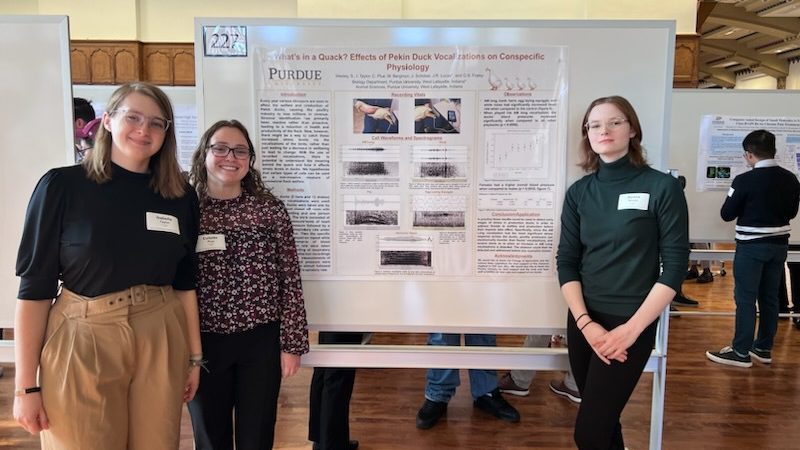
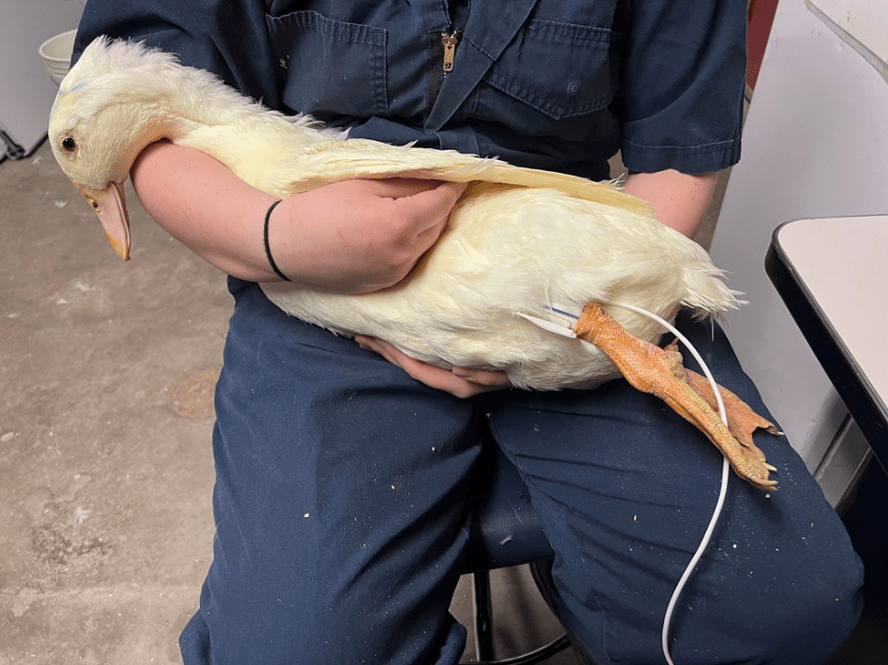
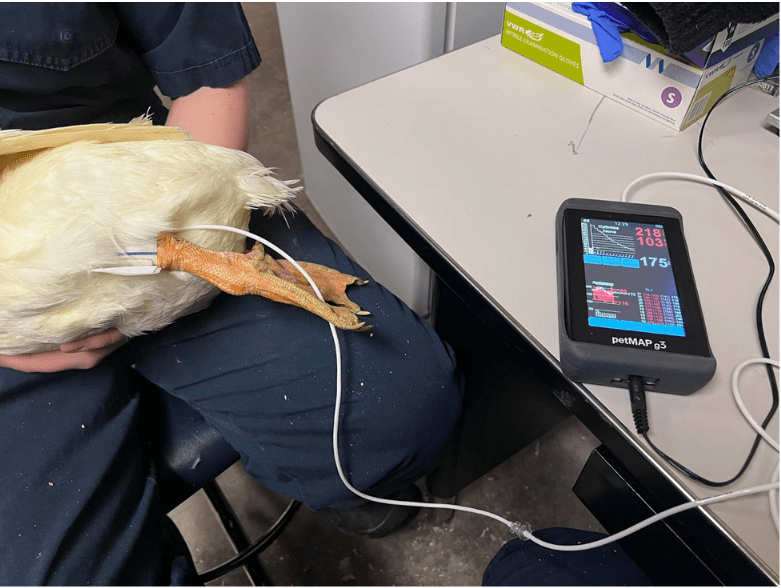
Bella, Serena, and Collette each played an equal role in contributing to the research project, from working with and caring for live ducks to collecting and analyzing the data, and finally reporting the findings through presentations and reports. Since their work involved live animals, multiple researchers were needed to track the various data points. For example, while someone was taking the ducks’ vitals another researcher was recording the ducks’ physiological response to different sound stimuli.
When considering her future, Bella plans on conducting neuroendocrinological research as a career. She notes that the hands-on skills gained from this work will contribute significantly to obtaining this goal.
“I can start on my [career] goals by learning more about the research world [while] developing skills and knowledge on [a] topic I am already incredibly interested in.”
Bella Taylor
Additionally, Serena and Collette are interested in pursuing careers in veterinary medicine. In addition to information on animal physiology and handling, Collette commented on interpersonal skills she furthered through her research experience, such as teamwork and communication.
“Having this experience, I feel more prepared to take on vet school and fulfill my career goal of becoming a veterinarian.”
Collete Plue
Serena first became involved in the research project by joining the Purdue Poultry Club. “By attending Poultry Club meetings, I got to know Dr. Fraley, the faculty advisor of the club,” notes Wesley. “He talked about his research and I was able to ask to be involved and work in his lab.” Research opportunities can arise from connections formed in multiple ways, including student clubs and organizations, and because of this, they encourage other students to explore areas of research that interest them.
“Do not be afraid to ask a professor what their research is about. The professors want to help you grow and learn, but you have to take the first step through the door.”
Serena Wesley
 Undergraduate Research Blog